Cookies disclaimer
Our site saves small pieces of text information (cookies) on your device in order to deliver better content and for statistical purposes. You can disable the usage of cookies by changing the settings of your browser. By browsing our website without changing the browser settings you grant us permission to store that information on your device. I agree

Gallery Weekend Berlin 2026 ZAW 2026 CFA Berlin Gallery Weekend Berlin 2026 ZAW 2026 CFA Berlin
2. April 2026

WHY, ACTUALLY? Tom McDonough on Christopher Williams’s “Radio Play”

Listening bars are currently all the rage in Berlin, with devout music lovers increasingly eschewing noisy clubs and bars to listen to choice vinyl selections on audiophile sound systems. A recent event by Christopher Williams put a unique spin on this trend by presenting two recent adaptations of a vintage radio play, originally broadcast in different East and West German versions in the early 1970s. The listening party format might seem custom-made for Williams, as an artist whose work often requires both a high standard of technical expertise and a high level of attention from viewers in highlighting the gaps and continuities that exist within technological processes of transmission – between different places and times, and between different systems and ideologies. Tom McDonough was in attendance and experienced Williams’s characteristic complexity in maximum fidelity.

Read on
27. March 2026

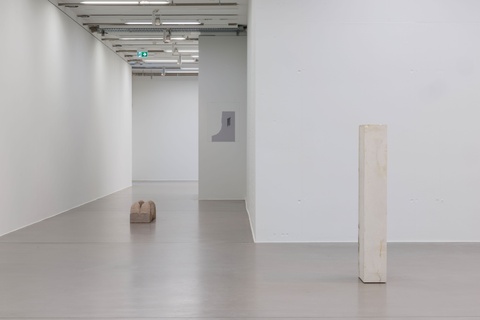
“I THREW AWAY THE REINS / BECAUSE THERE WERE NO REINS” Bruce Hainley on Trisha Donnelly at the Drawing Center, New York, and Tower MMK, Frankfurt am Main

Trisha Donnelly’s work often conveys a sense of muteness, either by giving concrete form to what defies verbal articulation or by stripping established modes of representation of any obvious referential basis. In doing so, the artist draws our attention to what remains when communication lacks any clear object or message, foregrounding aspects of perception or reception that usually go unnoticed. The defiant nature of Donnelly’s practice means her work is often labelled as opaque or even obscure, at times leading to gendered readings that frame the artist as deliberately withholding. But as Bruce Hainley writes in his discussion of two recent solo shows by Donnelly (and a concurrent group exhibition), to focus exclusively on the ontological opacity of her work means overlooking its true center of gravity: the complex movement between the concrete and the cosmic.

Read on

March 2026

Current Issue

Issue No. 141
March 2026
„Misogyny“

The current boom in misogynistic dynamics and topoi builds on a long tradition of gender discrimination against women while also – as this issue argues – exploiting recent technological and political developments. Rather than examining individual sexist practices or remarks in isolation, our current issue addresses misogyny as a cross-cultural phenomenon that expresses a deep-seated, albeit often unconscious, derogatory attitude toward women. In doing so, the focus is on how this attitude is manifested in literature, art, and pop culture, as well in prevailing media and sociopolitical conditions.

To the table of contents

25. March 2026

HEIMISCHES OBST Anna Sinofzik über André Butzer bei Max Hetzler, Berlin

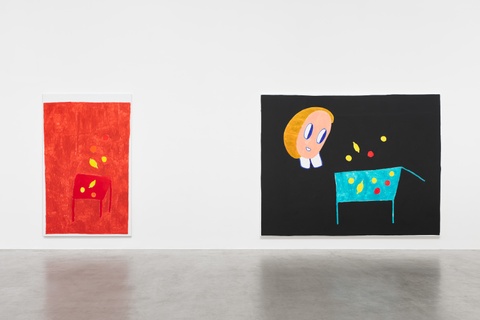
Das malerische Universum von André Butzer, der die Narrativierung seines Oeuvres seit den Neunzigern nicht nur mit seinen Bildern, sondern immer wieder auch in Prosa und Poesie vorantreibt, hat mit freischwebenden Frauenköpfen und Fruchtstilleben jüngst ein neues motivisches Zentrum gefunden. Vergangenes Jahr erstmals bei Max Hetzler in Paris zu sehen, wird Butzers Reihe der Frauen und Früchte nun in den Berliner Räumen der Galerie in der Potsdamer Straße neben Porträts historischer Denker präsentiert. Wie Anna Sinofzik beobachtet, sind letztere als ambivalente Figuren mit komplexen Körpern dargestellt, während die mit Früchten gepaarten Frauen vergleichsweise schematisch bleiben. Vor dem Hintergrund des aktuellen Heftthemas „Misogyny“ regt sie dies zur Reflexion der den Motiven und Darstellungsweisen eingeschriebenen Hierarchien und Geschlechtervorstellungen an.

Read on

24. March 2026

HENRIKE NAUMANN (1984–2026) Von Marietta Kesting

„Where were you in ‘92?“ Diese Frage stellt Henrike Naumann in ihrer schriftlichen Diplomarbeit und beantwortet sie ebendort mit einer Serie privater Schnappschüsse. Auf einem Foto, aufgenommen in Zwickau, performt sie im Alter von acht Jahren als Backgroundsängerin bei einem mit Freund*innen nachgespielten David Hasselhoff-Auftritt, an der Wand hinter ihnen hängt ein Bild mit sozialistischen Motiven. Welches Lied sie wohl singen? (...)

Read on

Artists' Editions

Leiko Ikemura, "Milk Lady", 2026

24. March 2026

HENRIKE NAUMANN (1984-2026) Von Susanne Pfeffer

Gesellschaftliche Umbrüche zeichnen sich – sonst wären es keine – auf allen Ebenen des Lebens ab. Zwar nicht in der eigenen Wohnung, aber in den Wohnräumen ihrer Mitschüler*innen beobachtete Henrike Naumann Anfang der 1990er Jahre Veränderungen. Die auf wenige Modelle beschränkten Möbel der Volkseigenen Betriebe (VEB) wurden aussortiert und durch pastellfarbene oder wild gemusterte Objekte und Accessoires der Postmoderne ersetzt. Aber nicht nur die Einrichtungen änderten sich, sondern auch die Betriebe und Institutionen. (...)

Read on

24. March 2026

HENRIKE NAUMANN (1984–2026) By Ekaterina Degot

Upon receiving Henrike Naumann’s completely unexpected last goodbye email, which was sent from her own account, announcing her death shortly after it occurred, I was not just utterly devastated about the disappearance of a great artist and dear friend but also immediately concerned about her legacy, which is as immense in its ideas as it is complex in its physical dimension. (...)

Read on

20. March 2026

ZURICH DOESN’T MEAN ANYTHING Leonie Huber on Tereza Glazova and Sveta Mordovskaya at Autokomanda, Belgrade

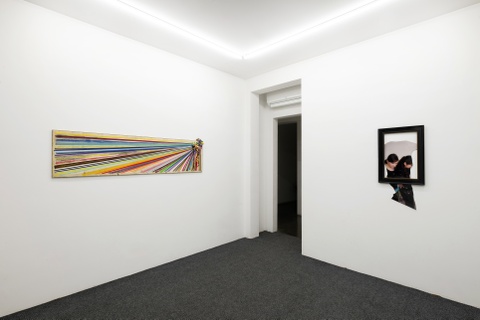
The local, social, economic, individual, and temporal characteristics of an artistic practice can be summarized under the concept of “idiom.” Just under ten years ago, an entire issue of TEXTE ZUR KUNST was devoted to this topic – exploring how the specificity of artistic expression is addressed, negotiated, and sometimes misunderstood in the globally interconnected art world. In her review of the duo exhibition by Tereza Glazova and Sveta Mordovskaya, Leonie Huber examines the way in which the two artists both evoke and destabilize a contemporary art “look,” contrasting it with preconceptions of an Eastern European idiom. For this, she also takes into account the characteristics of Autokomanda, the Belgrade exhibition space in which Glazova’s and Mordovskaya’s works are presented.

Read on

16. March 2026

ROSA VON PRAUNHEIM (1942–2025) Von Jan Künemund

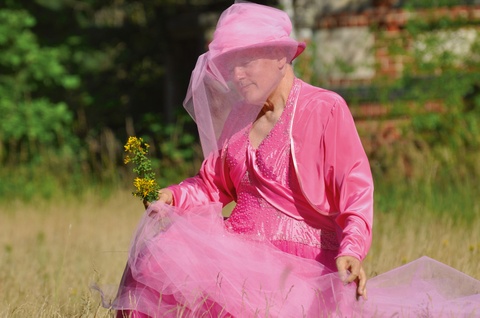
In etlichen Nachrufen, die seit Rosa von Praunheims Tod im Dezember 2025 publiziert worden sind, wurde sein Werk als Filmemacher vom Nachwirken seiner grell schillernden künstlerischen Persona überstrahlt. Natürlich lassen sich Rosa von Praunheims Filme nicht losgelöst von seinem Einfluss als Provokateur betrachten, der im Leben wie in seiner Kunst unablässig gegen die heteronormative Bürgerlichkeit rebellierte. Jan Künemund erweckt den „Erdbeerfrosch“ hier nochmal zum Leben, indem er ihn durch die Linse einer kleinen Auswahl an Filmen aus seinem umfangreichen und dezidiert unangepassten Œuvre betrachtet.

Read on

TEXTE ZUR KUNST stands for controversial discussions and contributions by internationally leading writers on contemporary art and culture. Alongside ground-breaking essays, the quarterly magazine – which was founded in Cologne in 1990 by Stefan Germer (†) and Isabelle Graw and has been published, since 2000, in Berlin – offers interviews, roundtable discussions, and comprehensive reviews on art, film, music, the market, fashion, art history, theory, and cultural politics. Since 2006, the journal's entire main section has been published in both German and English. Additionally, each issue features exclusive editions by internationally renowned artists, who generously support the magazine by producing a unique series.